
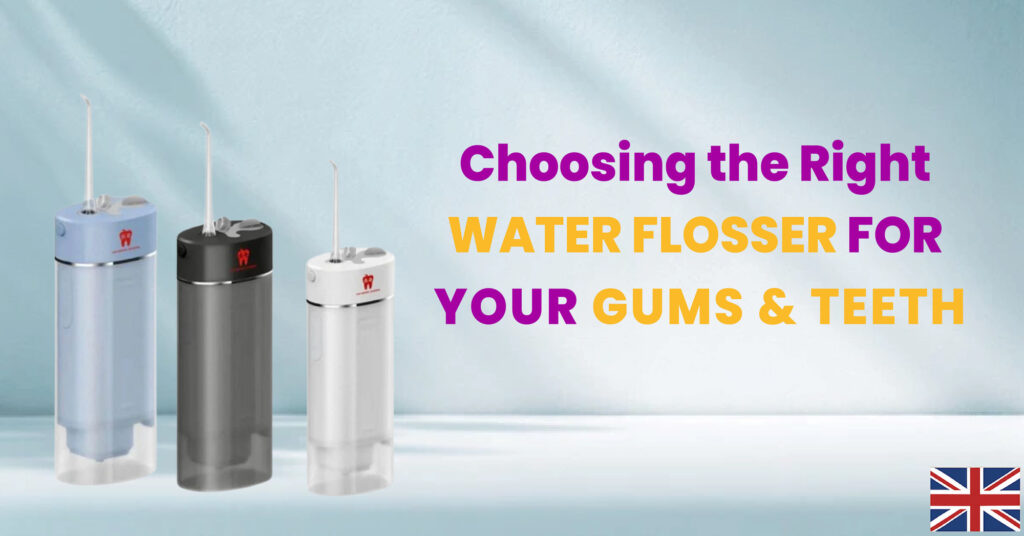
People often ask me this in a very simple way:“What is the best water flosser in the UK?”
Here’s the honest answer.There is no single “best” device for everyone. Mouths are different. Gums are different.
Healing needs are different.

After over 40 years in dentistry and holistic oral health, I no longer judge a water flosser by brand name or online ranking.
I judge it by what it does to living tissue over time. How the gums respond. How inflammation changes. How easy it is for a person to use gently and daily.
Some people need a basic water flosser.Some people need something more advanced.
And some people, especially those with chronic inflammation, implants, or healing issues, benefit most from ozone-based water systems ,which work on a different biological level.
This article will not push products. It will help you think clearly so you can choose what truly fits your mouth.
What a Water Flosser Must Do?
At its core, a water flosser must do one thing well:clean between the teeth and along the gumline without injuring the tissue.

To achieve that, a good device must:
-
Flush food and debris from tight spaces
-
Disturb plaque gently
-
Reach just under the gum edge
-
Be comfortable enough to use every day
Flush food and debris from tight spaces
Reach just under the gum edge
Be comfortable enough to use every day
If it relies on force to feel effective, it is already on the wrong path.
Gum tissue is living tissue . It heals through gentle stimulation, circulation, and consistency, not through trauma.
This is also why many people who struggle with string floss do better with water flossing. String scrapes Water flows.
How to Compare Popular Types in the UK?

In the UK market, almost all water flossers fall into one of two broad groups.
1. Standard Pressure-Only Water Flossers
These use plain water and pressure. They are widely available in UK pharmacies, supermarkets, and online retailers.
-
Removing food debris
-
Light plaque disruption
-
Daily hygiene for many people
Daily hygiene for many people
Their effect is mostly mechanical. They clean by flushing and force.
For some mouths, that is enough.
2. Ozone-Capable Water Systems
These systems generate ozone in the water before it reaches the mouth. Ozone is a reactive form of oxygen. When used correctly at safe levels, it actively alters the bacterial environment.
This changes the role of the device completely. It becomes a biological support tool, not only a physical cleaner.
-
Reduce harmful bacterial load
-
Support tissue oxygen balance
-
Lower chemical dependence
-
Support healing around inflamed or surgical sites
Reduce harmful bacterial load
Support tissue oxygen balance
Lower chemical dependence
Support healing around inflamed or surgical sites
This is why I treat ozone systems as their own category. They are not just “stronger water flossers.” They work on a different biological principle.
For those interested in the scientific background of ozone in dentistry, this peer-reviewed overview explains the mechanisms in simple terms.
Ozone is not required for every mouth. But there are clear situations where it often makes a visible difference.

From long-term observation, ozone-based water systems make the most sense for people who have:
-
Ongoing gum disease
-
Chronic bleeding
-
Dental implants
-
Recurrent infections
-
Slow or compromised healing
Slow or compromised healing
In these cases, pressure alone often is not enough. The bacterial environment itself needs to be addressed.
Standard water washes. Ozone changes the environment bacteria live in.
That difference matters when inflammation does not resolve easily.
How to Use a Water Flosser (Simple Guide)

Most people get poor results from water flossers because they use them too aggressively.
Use it like this instead:
-
Start on the lowest pressure
-
Lean over the sink
-
Place the tip at the gumline, not on the tooth surface
-
Trace slowly along the gum margin
-
Pause briefly between teeth
-
Use steady flow, not sharp bursts
-
Take at least one full minute
Start on the lowest pressure
Place the tip at the gumline, not on the tooth surface
Trace slowly along the gum margin
Pause briefly between teeth
Use steady flow, not sharp bursts
Take at least one full minute
Once a day is a minimum. Twice is ideal for people with active gum issues.
Some bleeding at the start is common when gums are inflamed. With gentle daily use, bleeding often reduces within two to three weeks.
Force never speeds healing. Consistency does.
You can alsow atch this video to learn in detail on it
The Dental Shaman Routine (AM & PM)
This routine is built around tissue respect, nervous system balance, and daily flow.

-
Brush gently
-
Water floss at low to moderate pressure
-
If using ozone, this is a good time to support microbial balance
-
Rinse
-
Slow nasal breathing for a few breaths
Water floss at low to moderate pressure
If using ozone, this is a good time to support microbial balance
Slow nasal breathing for a few breaths
-
Water floss again, slowly
-
Brush after flossing
-
A few calm breaths before sleep
Water floss again, slowly
A few calm breaths before sleep
Because blood flow, tissue repair, and immune response all depend on nervous system state. A tense body heals differently than a calm one.
Safety: When to Check with Your Dentist First?

Water flossers are generally safe. But you should pause and check first if you:
-
Have just had oral surgery
-
Have unstable periodontal disease
-
Have very deep pockets
-
Experience pain even at low pressure
-
Have a bleeding disorder
Have just had oral surgery
Have unstable periodontal disease
Experience pain even at low pressure
A water flosser should never cause sharp pain.
Also avoid very cheap devices made with low-grade plastics. The mouth is warm, moist, and sensitive. Materials matter.
The Oral Health Foundation also offers practical guidance on cleaning between teeth and managing gum health safely.

Ignore star ratings and sales language. Use this instead.
A good water flosser should give you:
-
True low-pressure settings
-
Stable, smooth water flow
-
Tips that are easy to clean and replace
-
Safe, tested materials
-
Comfortable grip and balance
-
A design that supports daily use
True low-pressure settings
Stable, smooth water flow
Tips that are easy to clean and replace
Comfortable grip and balance
A design that supports daily use
If you are considering ozone, also check:
-
How ozone is generated
-
Whether ozone levels are controlled
-
Whether the system is made specifically for oral use
Whether ozone levels are controlled
Whether the system is made specifically for oral use
Do not chase power. Chase control and consistency.
Why Many UK Users Prefer Ozone Cleaning?

Many UK users who shift from standard water flossers to ozone systems report the same pattern:
-
Less gum tenderness
-
Reduced bleeding
-
Cleaner feeling that lasts longer
-
Better comfort around implants
-
Fewer recurring flare-ups
Cleaner feeling that lasts longer
Better comfort around implants
Fewer recurring flare-ups
This does not mean ozone is essential for everyone. It means that for inflammatory and implant-heavy cases, it often adds a layer of biological support that pressure alone cannot provide.
UK Buying Perspective Without Brand Hype
In the UK, consumers are often pushed toward “top-rated” or “best-selling” lists. These lists usually measure:
-
Sales volume
-
Review activity
-
Price point popularity
-
Gum response over months
-
Tissue adaptation
-
Implant health
-
Long-term inflammation control
Long-term inflammation control
For this reason, I do not publicly name retail models without direct confirmation from my current verified clinical usage list. My focus is not on mass-market popularity. It is on biological outcome.
If someone wants the exact consumer devices I currently trust in the UK, those can be discussed separately with proper context and responsibility.
What Water Flossers Do Better Than String Floss?
From daily clinical observation, water flossers are often superior to string floss for:
-
Bleeding and sensitive gums
-
Deep periodontal pockets
-
Dental implants
-
Crowns and bridgework
-
Orthodontic appliances
-
Limited hand dexterity
Bleeding and sensitive gums
String floss works by scraping surfaces.Water works by flowing through spaces.
For inflamed tissue, flow is often safer than friction.
There is also moderate clinical evidence that water flossers can reduce bleeding and plaque when used alongside brushing. One example overview of the available research can be found here.
Common Mistakes That Stop Results
Most problems with water flossers come from misuse, not from poor design.
-
Starting with high pressure
-
Skipping the gumline
-
Rushing the process
-
Using poor-quality water
-
Inconsistent use
Starting with high pressure
Water flossing is not a quick rinse. It is a short daily practice.
And practice beats perfection.
The Credibility Behind These Views:
These views are not theoretical.
They come from over four decades of work across:
-
Conventional clinical dentistry
-
Biological dentistry
-
Ozone therapy
-
Breath-based healing
-
Nervous-system-aware oral care
Conventional clinical dentistry
Nervous-system-aware oral care
The focus has always been long-term tissue health rather than short-term cosmetic fixes. Gums, bone, nerves, and microbiology all respond over time. Tools must be judged over time too.
So, What Is the “Best” Water Flosser in the UK?
The best water flosser in the UK is not a brand name.
-
Fits your gum condition
-
Matches your healing needs
-
Allows gentle, controlled use
-
Encourages daily consistency
-
Supports, not shocks, living tissue
-
Ideally allows ozone-assisted cleaning when deeper biological support is needed
Matches your healing needs
Allows gentle, controlled use
Encourages daily consistency
Supports, not shocks, living tissue
Ideally allows ozone-assisted cleaning when deeper biological support is needed
For many people, a standard water flosser is enough.For people with implants, chronic bleeding, or slow healing, ozone-based systems often make more sense.
And for everyone, how you use it matters more than what you buy.
If you are choosing a water flosser in the UK, do not start with rankings.
-
Do my gums bleed?
-
Do I have implants or braces?
-
Am I sensitive to pressure?
-
Will I actually use this daily?
Do I have implants or braces?
Am I sensitive to pressure?
Will I actually use this daily?
Choose a device that respects your biology and your behaviour.
That is what truly decides your result.